
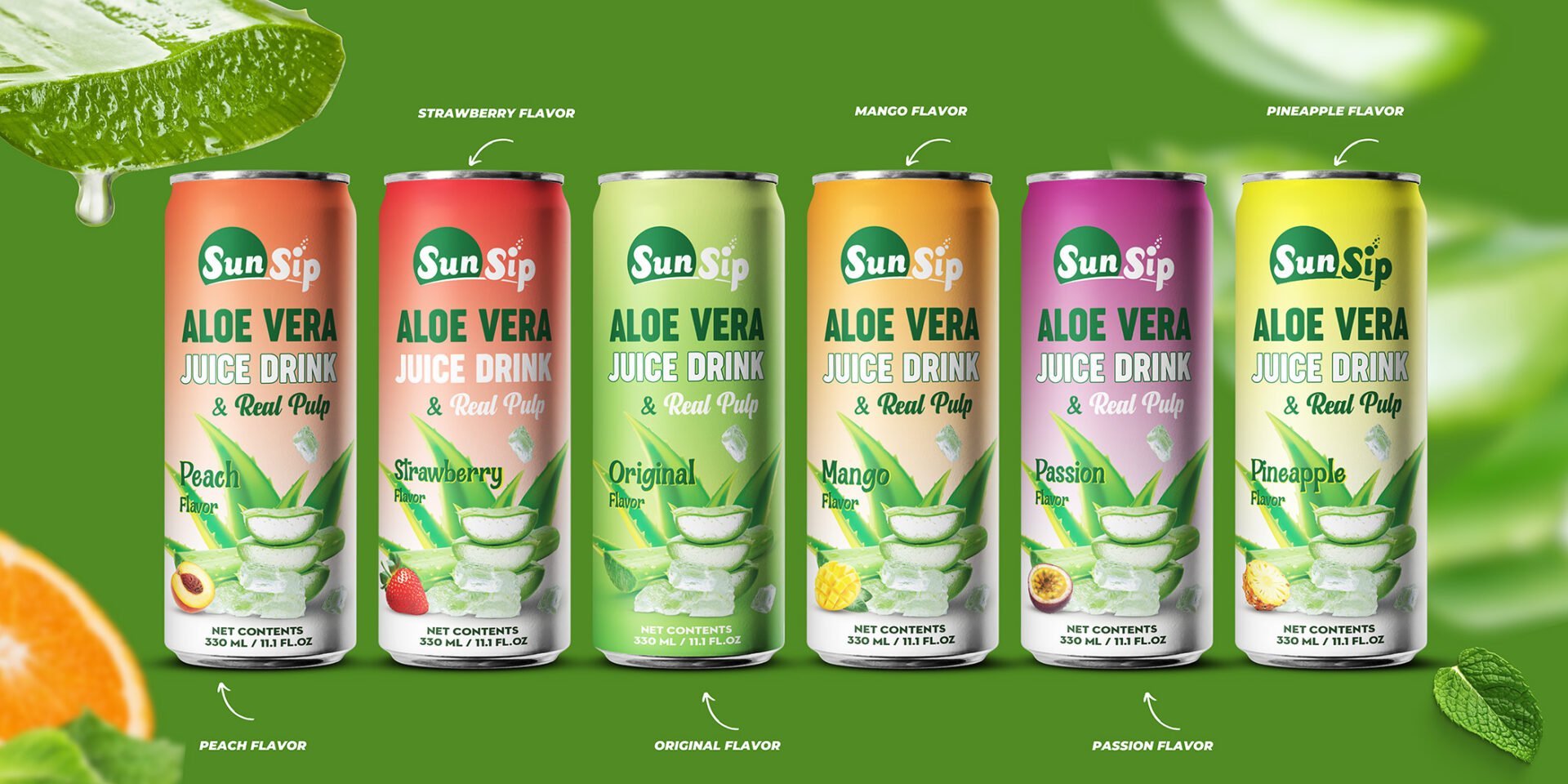
In recent years, aloe vera beverages have emerged as one of the fastest-growing categories in the global beverage market. Once considered a niche health drink, aloe vera-based beverages are now gaining widespread acceptance across retail, foodservice, and private label sectors worldwide.
This growth is not driven by short-term consumer trends alone. Instead, it reflects a deeper shift in global consumption patterns toward functional, plant-based, and wellness-oriented beverages. As a result, the aloe vera beverage segment has become increasingly attractive for importers, distributors, wholesalers, and private label buyers seeking long-term, scalable business opportunities.
For B2B stakeholders, aloe vera beverages represent more than just a product category—they are a strategic entry point into high-growth markets with strong demand across multiple regions.
Global Demand Drivers for Aloe Vera Beverages
Rising Health and Wellness Awareness
One of the most significant drivers behind the expansion of aloe vera beverages is the global rise in health-conscious consumer behavior. Across markets in Asia, the Middle East, Europe, Africa, and the Americas, consumers are actively seeking beverages that align with perceived wellness benefits and natural ingredients.
This shift has encouraged retailers and distributors to diversify their beverage portfolios with categories that are:
-
Plant-based
-
Low in artificial additives
-
Positioned as functional or lifestyle beverages
Aloe vera beverages fit naturally into this demand structure, making them an increasingly important category for B2B buyers.
Expansion of Modern Retail and Organized Distribution
The rapid expansion of modern trade channels—including supermarkets, convenience store chains, and organized retail formats—has accelerated the global penetration of aloe vera beverages.
From a B2B perspective, modern trade requires:
-
Consistent quality
-
Stable supply chains
-
Export-ready packaging and compliance
-
Long-term supplier relationships
These requirements favor beverage manufacturers capable of supporting scalable production and reliable international distribution, further strengthening aloe vera beverages as a strategic category for B2B cooperation.
Key B2B Markets Driving Growth
Middle East and North Africa (MENA)
The Middle East has become one of the most promising regions for aloe vera beverages due to:
-
High per-capita beverage consumption
-
Strong demand for non-carbonated and functional drinks
-
Rapid retail expansion in GCC countries
Importers and distributors in this region are increasingly focused on private label and OEM beverage solutions to differentiate their offerings in competitive retail environments.
Africa: Emerging Distribution Opportunities
Africa represents a fast-growing market where aloe vera beverages are gaining traction through:
-
Urbanization
-
Expansion of wholesale and informal retail networks
-
Rising demand for affordable functional beverages
For B2B buyers, Africa offers opportunities to build early-stage brand presence and long-term distribution partnerships.
Europe: Private Label and Compliance-Driven Growth
In European markets, aloe vera beverages are often positioned within:
-
Private label portfolios
-
Ethnic and international beverage segments
-
Health-oriented retail categories
European B2B buyers place strong emphasis on:
-
Regulatory compliance
-
Traceability and documentation
-
Consistent manufacturing standards
This makes collaboration with export-ready manufacturers essential for successful market entry.
Aloe Vera Beverages as a Strategic B2B Category
Portfolio Diversification for Distributors
For beverage distributors and wholesalers, aloe vera beverages provide an effective way to:
-
Diversify product portfolios
-
Reduce dependency on carbonated soft drinks
-
Address evolving consumer preferences
Unlike trend-driven novelty drinks, aloe vera beverages offer long-term category stability, making them attractive for sustained B2B growth.
Private Label and OEM Opportunities
Private label beverages continue to grow across global retail markets. Aloe vera beverages are particularly suitable for OEM projects due to:
-
Flexible branding potential
-
Strong consumer recognition of the category
-
Adaptability to different market positioning strategies
For B2B buyers, private label aloe vera beverages enable:
-
Faster market entry
-
Greater margin control
-
Stronger retailer relationships
Importance of Scalable Production in B2B Partnerships
Consistency as a Competitive Advantage
In B2B beverage sourcing, consistency is critical. Importers and distributors require partners who can deliver:
-
Stable production volumes
-
Uniform quality across shipments
-
Predictable lead times
Scalable production capacity allows beverage manufacturers to support both initial market entry and long-term expansion, reducing risk for B2B partners.
Export-Ready Manufacturing Processes
Successful participation in global B2B markets requires more than production capability. Export-ready manufacturers must operate with:
-
International quality standards
-
Documented production processes
-
Experience with multi-market logistics
These capabilities enable smoother cooperation with international buyers and support compliance across different regulatory environments.
Long-Term B2B Collaboration: A Strategic Approach
Beyond Transactional Relationships
The most successful aloe vera beverage projects are built on long-term partnerships, not one-off transactions. B2B buyers increasingly seek manufacturers who can act as:
-
Strategic supply partners
-
Market development collaborators
-
OEM solution providers
This approach fosters trust, efficiency, and shared growth over time.
Supporting Market Entry and Expansion
For importers and distributors, entering a new beverage category or market involves multiple challenges:
-
Market positioning
-
Regulatory alignment
-
Supply chain optimization
Working with an experienced manufacturing partner helps reduce these barriers and accelerates time-to-market.
Sustainability and the Future of Aloe Vera Beverages
Sustainability is becoming an increasingly important consideration in global B2B sourcing decisions. Aloe vera beverages align well with sustainability-focused strategies due to:
-
Plant-based positioning
-
Compatibility with clean-label trends
-
Growing consumer preference for responsible brands
Manufacturers that invest in sustainable practices and transparent operations are better positioned to meet future B2B expectations.
Why Aloe Vera Beverages Are a Long-Term B2B Opportunity
Unlike short-lived beverage trends, aloe vera beverages demonstrate characteristics of a sustainable growth category:
-
Broad global appeal
-
Alignment with wellness trends
-
Flexibility across retail and private label channels
For B2B buyers, this translates into a category that supports:
-
Portfolio stability
-
Market differentiation
-
Long-term revenue growth
Conclusion: Building Strategic Partnerships in the Aloe Vera Beverage Market
The global aloe vera beverage market presents significant opportunities for importers, distributors, wholesalers, and private label buyers seeking scalable, future-ready beverage solutions.
As demand continues to grow across multiple regions, success in this category depends on:
-
Strong manufacturing partnerships
-
Export-ready processes
-
A long-term B2B collaboration mindset
By aligning with reliable beverage manufacturers and adopting a strategic approach to market entry, B2B stakeholders can position themselves for sustained growth in the evolving global beverage landscape.