
Afghanistan is currently one of the strong-performing markets for SunSip Beverages Vietnam. SunSip products are not only present in the market—they are selling well and moving fast through distribution channels, with visible retail presence and strong rotation. This success is an important signal for global B2B buyers: when a beverage line performs in real trade conditions, it proves product-market fit, supply stability, and distribution readiness.
Building on that momentum, SunSip Beverages Vietnam is now focusing on a bigger goal: partnering with large-scale B2B importers, distributors, wholesalers, retail chains, and brand owners in other countries worldwide who want reliable, export-ready beverage supply and a scalable product portfolio.
This SEO-focused article is written for international B2B customers looking for:
-
Fruit Juice (multi-volume options) for different retail channels
-
Nata de Coco drinks (fruit beverage with chewy coconut jelly)
-
Coconut Water (a fast-growing natural refreshment category)
If you are planning to expand your beverage portfolio in your country—whether in the Middle East, Central Asia, Africa, Europe, or other markets—this guide will help you understand why SunSip is a strong OEM/export partner and how to build a winning assortment strategy.
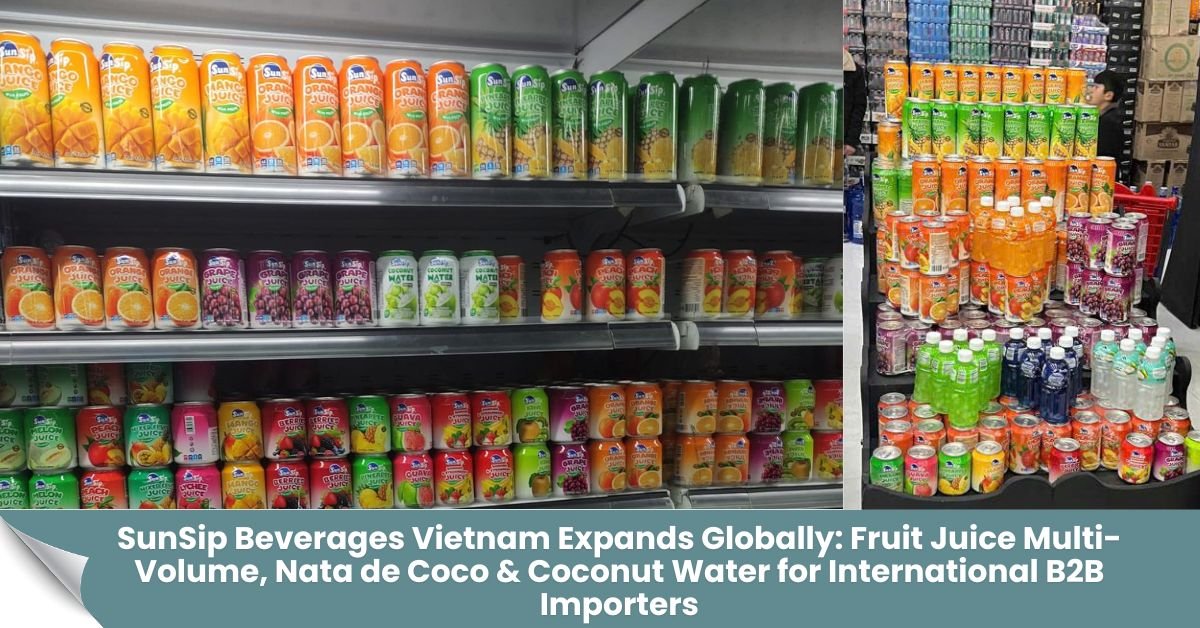
Why SunSip Works for International Markets: Proven Sell-Through, Strong Shelf Impact, Export-Ready Supply
When a beverage brand succeeds across borders, it usually shares three qualities: market-friendly flavors, strong packaging visibility, and reliable export operations. SunSip has been developed with international distribution realities in mind.
1) Market-ready flavors that are easy to sell
Fruit flavors like Orange, Mango, Guava, Pineapple, Grape, Mixed Fruit have a universal appeal. They are simple for consumers to understand and easy for retailers to stock and rotate.
2) Packaging that increases shelf conversion
In beverages, the product must communicate fast: “what flavor is this?”, “is it refreshing?”, “does it look premium or value?”. SunSip labels are designed to help buyers decide quickly at the cooler or shelf.
3) Supply stability for long-term B2B programs
Importers and distributors need predictable production and repeat consistency. SunSip is built to support repeat orders, scalable volume, and long-term cooperation, not one-time shipments.
4) A portfolio that supports channel segmentation
A major B2B advantage is the ability to sell different sizes and product types across multiple channels—traditional trade, modern retail, wholesale networks, and HoReCa.
Core Product Portfolio for Global B2B Buyers
SunSip’s export portfolio is built around three high-demand beverage groups that fit many international markets.
1) Fruit Juice Multi-Volume: A High-Rotation Category for Retail, Wholesale & Modern Trade
Fruit juice remains one of the most reliable “volume drivers” in beverages. For B2B importers, it is often the category used to build distribution quickly because it is:
-
easy to position (refreshment + fruit taste)
-
familiar to consumers
-
strong in coolers and convenience stores
-
suitable for both traditional trade and modern retail

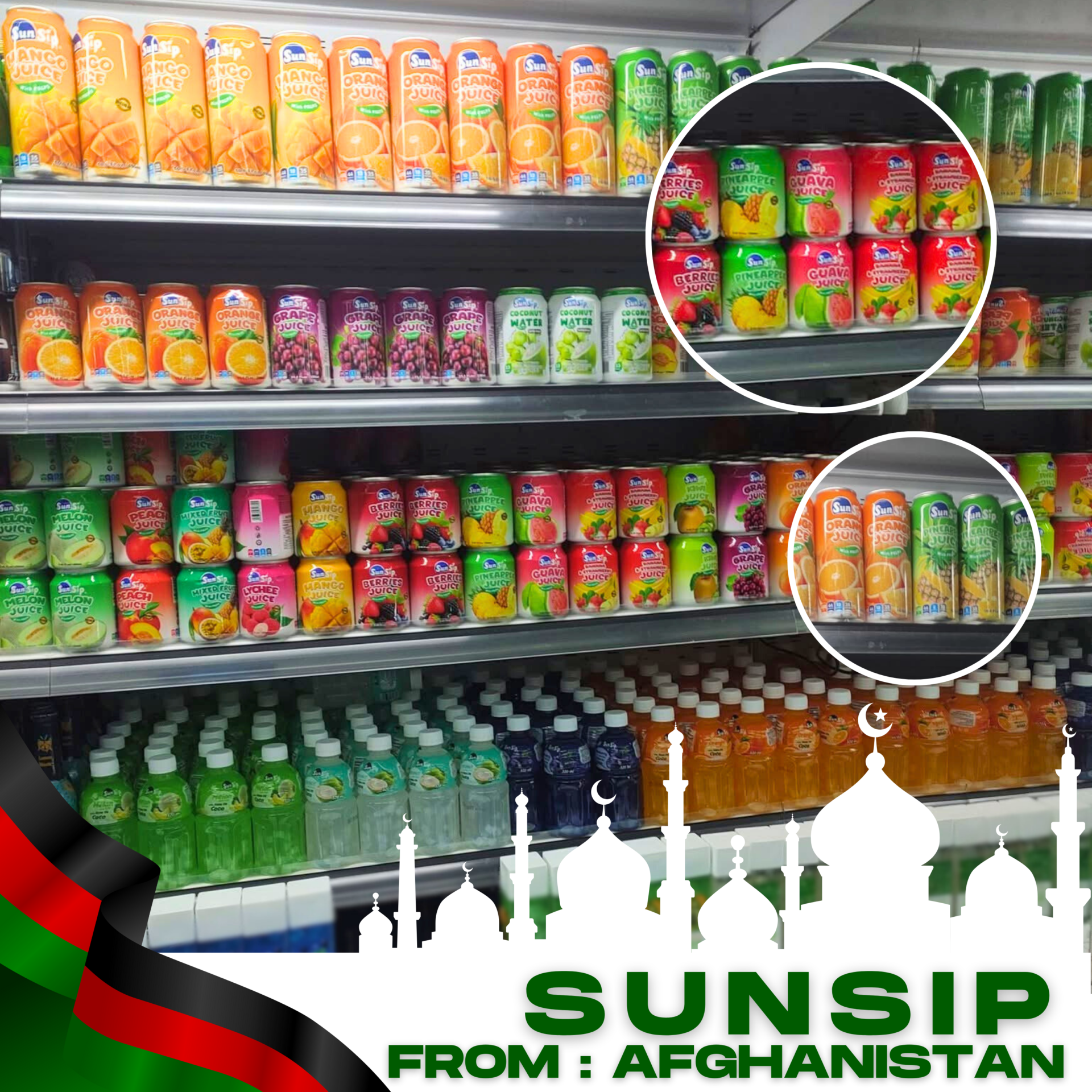
Why multi-volume matters for B2B buyers
Every country has different channel dynamics. Multi-volume options allow you to tailor the same product line to different buyers:
-
Smaller volume: strong for impulse purchase, convenience stores, cooler sales, fast rotation
-
Medium volume: balanced option for daily consumption, broad retail coverage
-
Larger volume: value-driven family purchase, supermarket positioning, wholesale cartons
A multi-volume strategy helps you win shelf space because you can serve multiple retail formats with one consistent supply partner.
Recommended fruit juice flavors for international distribution
SunSip’s fruit juice range is often developed around globally proven sellers:
-
Orange Juice – universal best-seller, essential core SKU
-
Mango Juice – strong flavor identity, high preference in warm-climate markets
-
Guava Juice – tropical profile, strong acceptance in many regions
-
Pineapple Juice – refreshing taste, easy repeat purchase
-
Grape Juice – distinct color and flavor profile, good shelf variety
-
Mixed Fruit / Berry options – portfolio diversification, supports premium perception
For new market entry, B2B buyers typically start with 4–6 core flavors to build fast rotation and simplify inventory management.
2) Nata de Coco Drinks: A Differentiated Product Line with Strong Consumer Experience
Nata de Coco drinks combine fruit beverage refreshment with a chewy texture that many consumers enjoy. For international distributors, this category creates a clear advantage:
-
it stands out at the shelf
-
it offers a “new experience” beyond regular juice
-
it supports brand visibility and product curiosity
-
it can grow quickly with the right channel placement
What makes Nata de Coco attractive for importers
This is not a “standard commodity drink.” It gives distributors differentiation—especially in markets where standard juice competition is heavy.
Nata de Coco also supports multiple consumer segments:
-
younger consumers who like novelty and texture
-
shoppers seeking a more “fun” beverage experience
-
retail environments where impulse purchase is strong
For B2B programs, Nata de Coco works best as a portfolio enhancer: it improves shelf appeal and helps your brand look more modern and diverse.
3) Coconut Water: A Long-Term Growth Category for Natural Refreshment
Coconut water has become a strategic product in many markets because it aligns with trends like:
-
natural refreshment
-
clean taste preference
-
daily hydration positioning
-
premium or mid-premium category building
For distributors, coconut water is often the product that helps expand into:
-
supermarkets and modern trade
-
premium stores and higher-income segments
-
fitness or lifestyle-driven retail spaces
Why coconut water should be part of your portfolio
Fruit juice is often the “volume engine.” Coconut water is the “brand builder.” Together, they help you cover both mass demand and premium demand—using one supply chain.
Assortment Strategy for International B2B Customers: How to Build a Winning Portfolio in Your Country
This section is designed as a practical strategy for B2B importers and distributors worldwide. You can apply it regardless of whether you operate in the Middle East, Central Asia, Africa, Europe, or other regions.
Step 1: Build a core assortment that sells fast
Start with a focused portfolio to minimize risk and maximize rotation:
-
Fruit Juice: 6–8 SKUs (core flavors first)
-
Nata de Coco: 2–4 SKUs (differentiation + trial)
-
Coconut Water: 1–2 SKUs (natural segment entry)
This structure creates a balanced shelf:
-
high-rotation items (fruit juice)
-
differentiation items (nata de coco)
-
premium/natural items (coconut water)
Step 2: Segment SKUs by channel (retail vs wholesale vs modern trade)
Instead of pushing everything everywhere, choose the best channel for each group:
-
Small/medium juice volumes → convenience stores, coolers, impulse channels
-
Larger juice volumes → supermarkets, family purchases, value-driven stores
-
Nata de Coco → modern retail, high-footfall stores, cooler-driven locations
-
Coconut water → supermarkets, premium retail, lifestyle-driven channels
This helps you avoid slow-moving SKUs and improves cash flow.
Step 3: Optimize based on sell-through data
After the first sales cycle, use real data to refine:
-
increase production focus on top 2–3 flavors
-
adjust volume mix to match channel demand
-
reduce low-rotation flavors and replace with better fit options
This is how successful importers scale: not by adding more SKUs quickly, but by doubling down on what already sells.
Step 4: Expand portfolio once distribution is stable
Once your core line is stable, you can expand:
-
new fruit flavors
-
additional packaging volumes
-
extensions into related categories
SunSip supports scaling programs where growth is planned across quarters—not random.
SunSip Beverages Vietnam Is Seeking Global B2B Partners Beyond Afghanistan
Afghanistan demonstrates strong market response to SunSip products. Now SunSip Beverages Vietnam is actively looking to expand cooperation with B2B partners in other countries worldwide, including:
-
beverage importers and master distributors
-
wholesale network operators
-
supermarket and retail chains
-
HoReCa supply partners
-
brand owners seeking OEM / private label beverage production
What SunSip offers global B2B partners
-
export-ready production and stable repeat supply
-
multi-volume fruit juice portfolio for channel flexibility
-
differentiated Nata de Coco product line
-
coconut water for natural refreshment segment growth
-
OEM / private label capability for brand ownership
If your company is building a beverage portfolio for your country, SunSip can support both:
-
ready brand supply (SunSip branded products)
-
OEM/private label manufacturing to develop your own brand
OEM / Private Label Opportunities: Build Your Beverage Brand with SunSip
Many importers are moving beyond simple distribution and building their own brands. With SunSip’s OEM/private label model, you can create:
-
your own brand name and label design
-
customized flavor positioning
-
packaging adaptation for your market language and compliance needs
-
a portfolio roadmap that grows over time
This is especially valuable if you want:
-
distributor exclusivity
-
stronger margin control
-
long-term market asset building
Contact SunSip to Receive a Catalogue for Fruit Juice, Nata de Coco & Coconut Water
If you are a B2B importer, distributor, or brand owner and want to expand your beverage business in your country, SunSip Beverages Vietnam can provide:
-
full export catalogue
-
product specifications and packaging options
-
recommended best-seller assortment for your market
-
cooperation model: SunSip brand or OEM/private label
To receive the catalogue faster, share:
-
your company name
-
target country and sales channels (wholesale / retail / supermarket / HoReCa)
-
products you want (fruit juice multi-volume / nata de coco / coconut water)
SunSip will reply with a tailored proposal suitable for your market.