Every importer, distributor, or retailer entering the coconut water category eventually hits the same fork in the road: sign up as a distributor for an established brand, or launch a private label coconut water line under your own name. Both routes get product on shelf. They lead to very different businesses.
This isn’t a “private label is always better” article. Each model fits a different stage, budget, and goal — here’s how to actually decide.
The Two Models, in Plain Terms
Reselling an established brand means you buy inventory (or sign a distribution agreement) for a brand that already exists — Vita Coco, Coco Libre, or a regional name already known to consumers. You handle logistics, retail relationships, and local marketing. The brand, formula, and packaging are fixed.
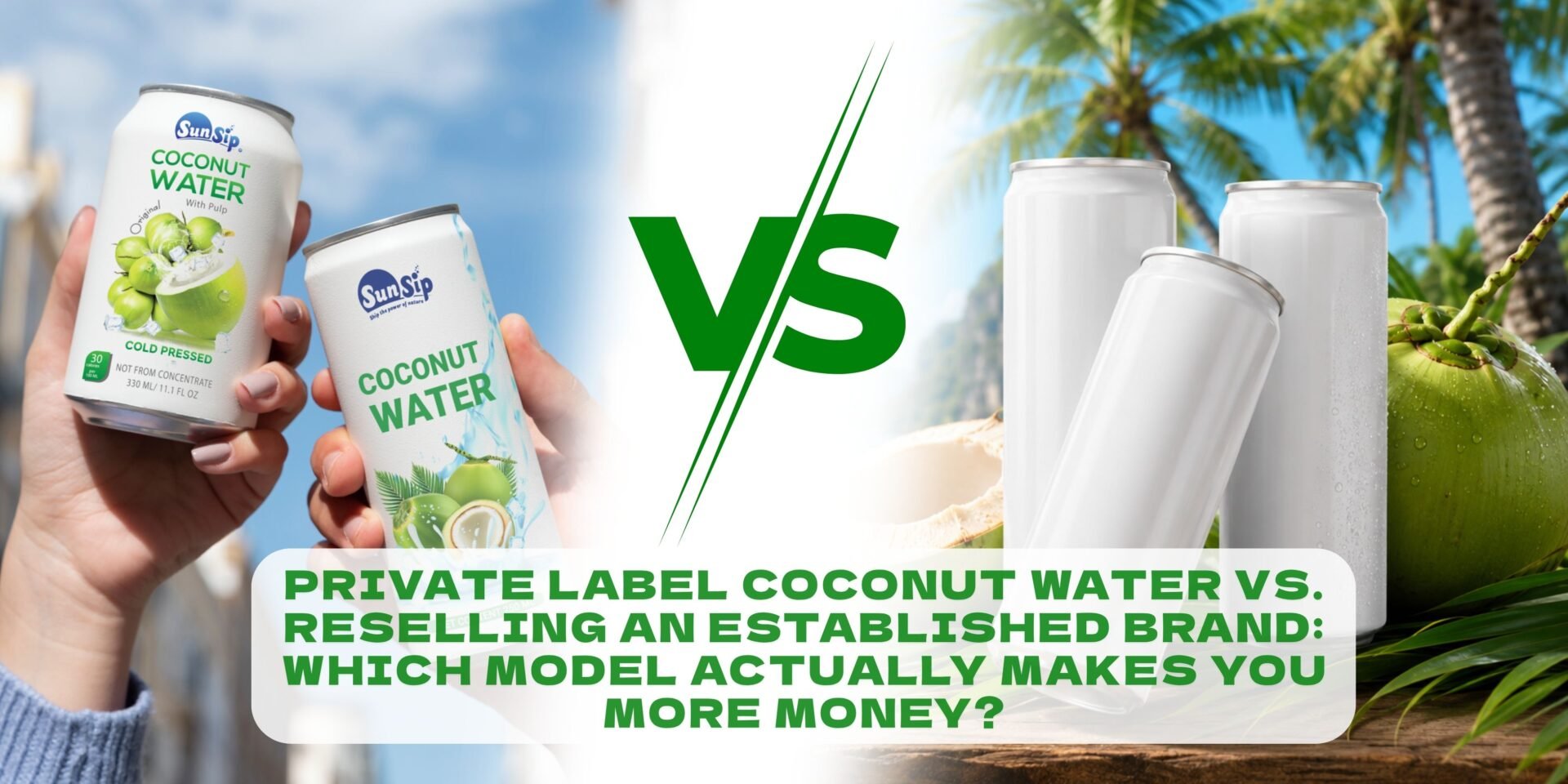
Private label coconut water means a manufacturer produces the product to your specification, but the brand on the bottle is entirely yours. You control the name, packaging, flavor profile, and pricing — and you own whatever brand equity you build.
Where Reselling Wins
- Speed to market. No formulation, no label design, no MOQ negotiation — you can often start selling within weeks.
- Lower upfront risk. Established brands usually have proven sell-through data, so you’re not betting on unknown demand.
- Built-in consumer trust. A shopper who already recognizes the brand doesn’t need convincing at shelf.
- Less operational complexity. No need to manage a manufacturing relationship, quality control, or packaging design — that’s the brand owner’s job.
The tradeoff: margins are structurally lower, because the brand owner takes their cut for the product’s market equity. You’re also fully dependent on their pricing decisions, their supply reliability, and — if they decide to enter your market directly or switch distributors — your business relationship.
Where Private Label Wins
- Higher margins. Without a brand markup baked into your cost, the spread between landed cost and retail price is typically wider.
- Full pricing and positioning control. You decide whether to compete on price, premium positioning, flavor innovation, or a specific market niche (organic, low-sugar, functional-plus-electrolytes, etc.).
- You own the customer relationship and the brand equity. Every dollar of marketing you spend builds an asset you control — not someone else’s brand.
- Product differentiation. You’re not locked into one SKU lineup; you can develop flavors, formats, and packaging that fit your specific market gap.
The tradeoff: you carry more of the early-stage risk. You’re responsible for sourcing a reliable OEM manufacturer, managing MOQs, building demand from zero brand recognition, and getting the formulation and packaging right the first time.
A Side-by-Side Look
Line the two models up against each other and the pattern is consistent: reselling wins on speed and simplicity, private label wins on margin and ownership. Time to market for a resold brand is typically a matter of weeks, versus one to three months to develop and launch a private label line. Upfront investment follows the same logic — reselling requires little more than an initial inventory buy, while private label carries the added cost of MOQs, label design, and sampling before the first sale. Gross margin, unsurprisingly, tilts toward private label, since there’s no brand markup built into the cost base. Brand equity belongs to whoever owns the name: with a resold product, that’s the brand owner; with private label, it’s you. The same split applies to pricing control and product customization — a reseller works within someone else’s pricing and SKU lineup, while a private label owner sets pricing freely and can shape flavor, packaging, and formulation to fit a specific market gap. Dependency risk runs in the opposite direction: reselling ties your business to one brand owner’s decisions, while private label lets you work with multiple manufacturers if needed. And over the long term, only private label builds an asset with real exit value — a brand you could eventually sell — while a distribution relationship ends when the contract does.
So Which One Should You Actually Choose?
Reselling makes sense if you’re testing whether coconut water sells in your specific market before committing capital, you have strong retail placement but limited marketing budget to build brand awareness from scratch, or you’re a distributor whose core value is logistics and retail relationships rather than brand-building.
Private label makes sense if you already have a customer base or retail shelf space and want to capture more margin, you see a specific gap the existing brands aren’t filling (unsweetened, organic, sparkling, functional, region-specific flavors), or you’re building a long-term beverage brand rather than a distribution business.
Many successful importers actually run both models in sequence — reselling an established brand first to validate demand and build retail relationships, then transitioning core volume to a private label line once the category is proven in their market.
What Private Label Actually Requires From a Manufacturing Partner
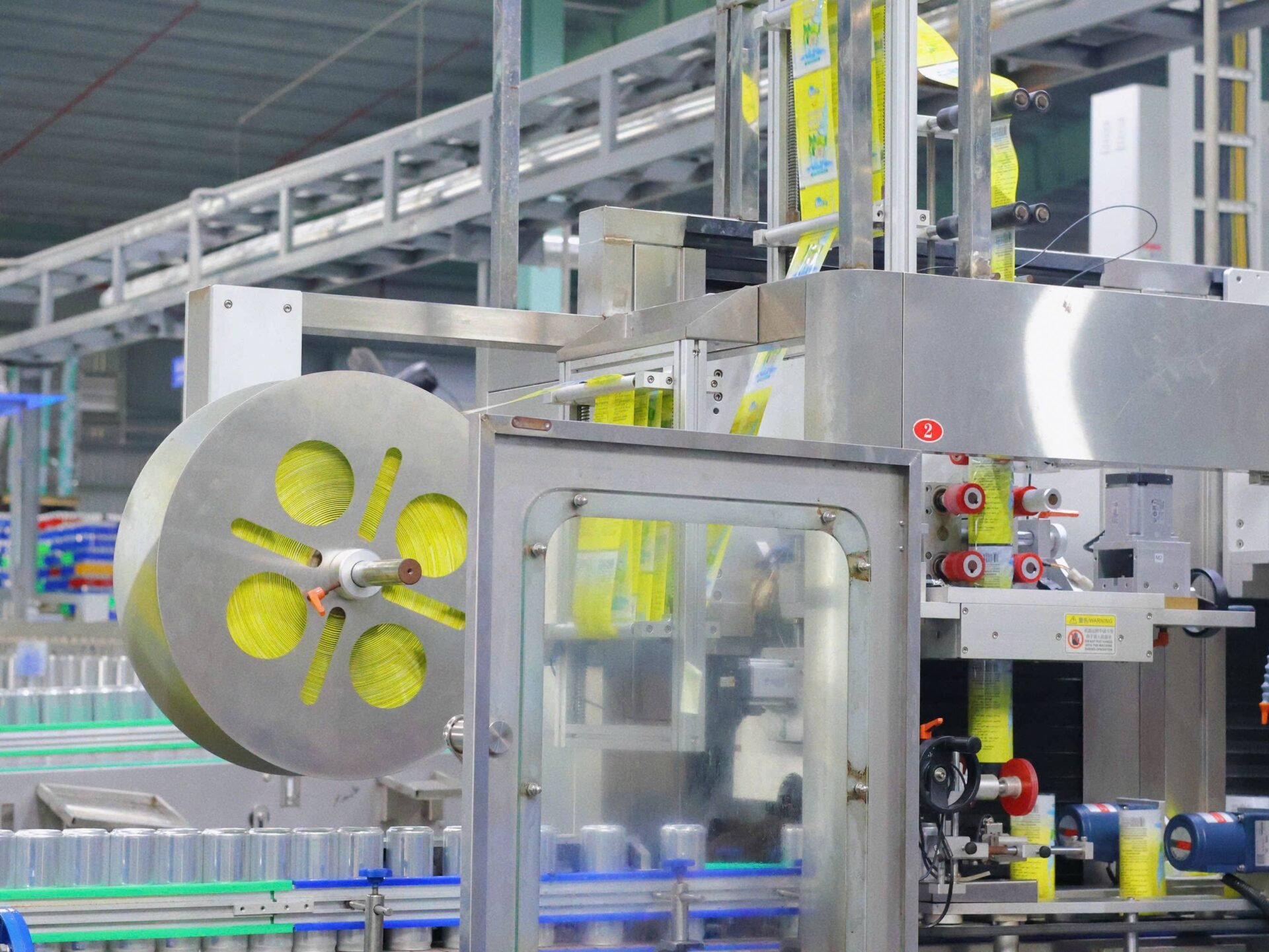
If private label is the direction, the manufacturing side matters as much as the brand side. At minimum, look for a coconut water manufacturer that offers:
- Both 100% natural and flavored/functional formulation options
- Manageable MOQs for a first order, without punishing pricing at small volumes
- Free or low-cost label and packaging design support
- Export documentation experience for your destination market (FDA, Halal, EU, depending on where you’re selling)
Final Thought
There’s no universally “right” model — only the right one for where your business is today, and often the right one differs by market. A buyer entering a new region with no brand recognition yet may be better served starting under an established name, while a buyer with existing shelf space and a clear customer base may capture more value going private label from day one. The two models aren’t mutually exclusive either — many businesses run both at once, using each where it fits best.
SunSip Beverages Vietnam works both ways: as a branded coconut water supplier under the SunSip name for markets where an established product speeds things up, and as a private label / OEM manufacturer for buyers who want full control over their own brand. Which model makes sense usually comes down to your specific market and what your customers are asking for — happy to talk through both and recommend the right fit. Contact us to discuss your market and get a quotation.